

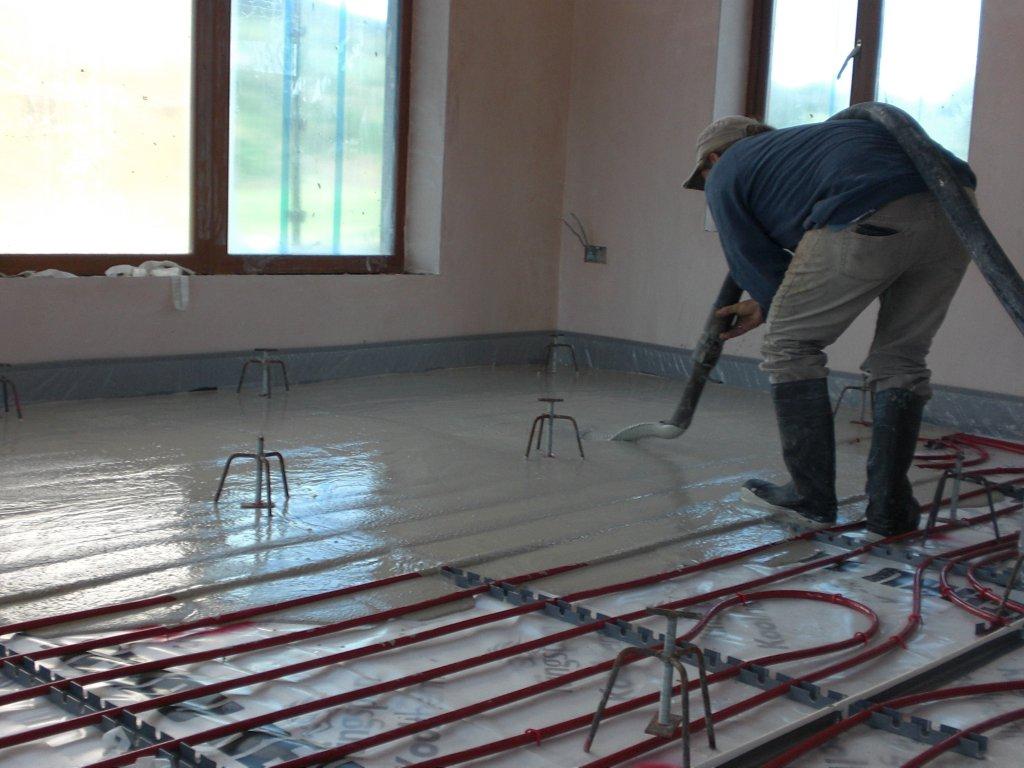
What Happens When Screed Meets Moisture
Moisture trapped under screed creates serious problems. The material struggles to bond properly with the substrate. Debonding occurs as the screed pulls away in patches. Those areas sound hollow when tapped. They eventually crack under foot traffic or point loads.
Surface failure follows close behind. Blisters form where vapour pressure builds. The top layer powders or flakes away. This leaves an uneven base that ruins any floor finish laid on top. Tiles lift. Timber warps. Carpet backing degrades.
Drying times extend dramatically too.Liquid screed in Berkshire relies on controlled evaporation. Excess substrate moisture slows the process. What should take days stretches into weeks. Projects stall. Follow-on trades wait. Costs climb as teams sit idle. We have rescued sites where rushed pours added months to the programme.
Our Process to Prevent Failure
We begin every job with thorough pre-pour moisture testing. Hygrometers give us relative humidity readings across multiple points. We map the results. No guesswork enters the equation. If readings exceed safe thresholds, we specify the correct liquid DPM system.
Site preparation comes next. We clean the slab mechanically. We remove laitance, dust, and any contaminants. Primers bond tightly to the prepared surface. Sealing follows to lock out external moisture during the critical early days.
We protect the fresh pour from rapid drying or drafts that cause curling. Our teams monitor conditions throughout the initial set.
This disciplined approach sets Topmix Ltd apart. We deliver liquid screed in Berkshire that stays bonded and performs for decades. The same standards apply when clients request traditional screed in Bristol. We match the method to the site, never the other way around.
Can screed dry naturally over damp concrete?
No. Moisture must exit in a controlled manner. Trapped vapour creates pressure that destroys the bond. Natural drying over a persistently damp slab simply fails. We always isolate the problem first.
How long should slabs cure before we lay screed?
Concrete slabs need time to reach stability. A minimum of 28 days allows initial strength gain. Yet full drying takes far longer, depending on thickness and conditions. We test rather than rely on calendars. Some slabs require six to eight weeks or more before moisture levels drop safely. Rushing this stage remains the most common cause of later headaches.
We also address thickness. Liquid screed works efficiently in thinner sections. This reduces overall weight and speeds drying. Traditional screed in Bristol often needs greater depth to achieve strength. Each project dictates the right choice.
Another factor involves underfloor heating. Pipes embedded in screed change the heat distribution. We design layouts that avoid cold spots and ensure even drying. Moisture management becomes even more critical here.
Make moisture management a non-negotiable part of your floor specification. Choose partners who test rigorously and prepare thoroughly. Your project deserves floors that last. We deliver exactly that at Topmix Ltd.